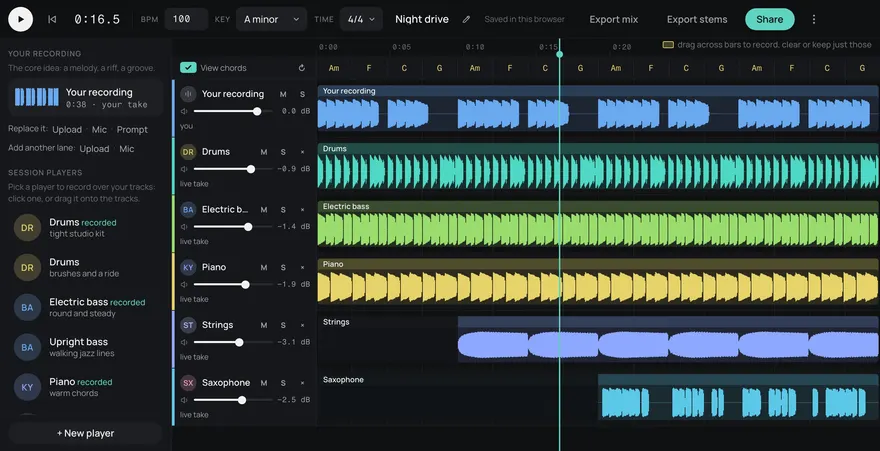
a light, thoughtful puzzle loop with soft plucked strings, a warm electric piano and gentle malletsExample
Drums
Bass
Guitar
Keys
Other
Music that keeps someone company while they think, and gets out of the way when they're stuck. Make calm, steady loops for logic puzzles and brighter ones for match games.
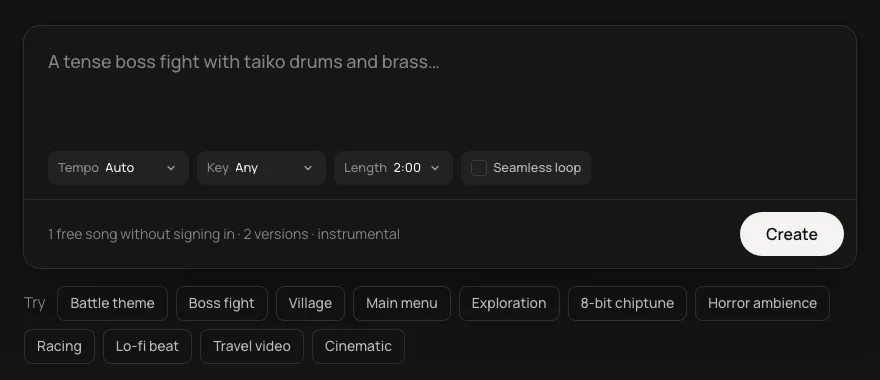
This is an example. Describe your own above and it comes like this too: solo a part, redo one, download them, or edit it in Studio.
Made from these words on this page, each with its stems. Move a level, or press M or S, to hear a part on its own.
A puzzle game's music sits under someone working something out. If it's busy, it competes with their thinking; if it changes suddenly, it breaks their focus. What works is steady and light.
Turn on Seamless loop. A hard puzzle can take a long time, and a seam in the music is a small distraction every time it comes round.
Not every puzzle game is quiet.
A short solved sting with Seamless loop off, in the key of the loop, makes each answer feel good. For a puzzle on a timer, use the five stems (drums, bass, guitar, keys and other): start with keys and other, add the bass as time runs down, and bring in the drums for the last seconds. The loop generator has more on loops that stack.
No. Players often spend a long time on one level, and one theme per chapter or world is plenty. Change the music when the puzzles change type.
Make a set of loops in one key at rising tempos, or keep one loop and add stems as the difficulty climbs.
A small one. A busy tune competes with the player's own thinking, so ask for a short motif with plenty of rests, or soft chords and a pulse with no lead at all.
Yes. Every song is royalty-free on every plan, Free included: use it in commercial games, videos, streams, podcasts and apps.
Yes. Add https://gen.daydream.live/mcp as a custom connector in Claude, or as a custom MCP server in ChatGPT, or add the Daydream app from ChatGPT's directory, and sign in with your Daydream account. Then describe a song in the chat: it plays there with its stems in their own lanes, and if you ask for new drums it makes that part again with the other four as they are. It spends the same credits as this page, 5 a song. How to add it.